Why Roatan?
Roatan is part of Honduras's Bay Islands, sitting along the Mesoamerican Barrier Reef — the same reef system that runs through Belize and Mexico's Yucatán, and the second largest in the world after Australia's Great Barrier Reef. What this means for divers: wall dives that drop thousands of feet, coral health that rivals anywhere in the Caribbean, and an underwater ecosystem that has been actively protected since 2005 by the Roatan Marine Park.
Unlike much of the Caribbean, Roatan's reefs are genuinely thriving. The marine park's conservation work, combined with strong local diver engagement, means you're diving reefs that look the way the Caribbean used to everywhere — dense coral, abundant fish life, healthy sponge formations, and regular encounters with turtles, eagle rays, and reef sharks.
Water temperature ranges from around 77°F (25°C) in winter to 84°F (29°C) in late summer. Most divers opt for a 3mm shorty or dive skin. Visibility is typically 80–120 feet, and often considerably more on the east side of the island.
Worth knowing
Roatan is a 40-mile-long island. The west end — where most tourists and cruise passengers concentrate — has become what every other Caribbean port eventually becomes: crowded, commercialized, and indistinguishable from the last stop on the cruise circuit. Dive sites there are shared with dozens of boats daily. The east side, where El Palacio Rosa is located, has a fraction of the dive traffic, healthier reefs, and access to sites that most west-end shops never visit.
The Best Dive Sites
Near Carib Bight
🐠 Roatan Marine Park
We encourage all guests to make a voluntary contribution to the Roatan Marine Park — the organization that protects the reefs, enforces the marine park boundaries, and keeps these dive sites as spectacular as they are. Without them, none of this exists. Make a voluntary park fee donation →
The following sites are all accessible within 15 minutes from our dock at Carib Bight. These are the sites we return to again and again — and the ones most west-end dive shops rarely, if ever, reach.
Calvin's Crack
30–80 ft · Jonesville Point
One of Roatan's most iconic dive sites. A dramatic elbow-shaped plateau formed by ancient volcanic activity creates a long crevice starting at 30 feet and opening onto the wall at 80. The crack walls are thick with life — sponges, soft corals, and dense fish populations. A bucket-list site that's practically in our backyard.
Patti's Place & The Train Station
20–90 ft · East Roatan · Snorkel / Scuba
A local favorite that rarely sees outside dive boats. Schools of snapper congregate in numbers that feel almost implausible — and when conditions align, The Train Station kicks in: the largest concentration of fish life we know of on the east side, all stacked up in one extraordinary moment. The wall drops through sponge-covered overhangs to depths well beyond recreational limits, but the upper reef from 20–60 feet is where the real show happens.
Carib Wall
30–100+ ft · Carib Bight
A dramatic vertical reef wall with deep-water sea fans thriving in the current. Creole wrasse, yellowtail snapper, blue chromis, and black durgeon school in impressive concentrations. A sloping upper plateau at 30–40 feet makes it accessible for a range of experience levels.
The Roly Poly
15–40 ft · Between the neighbor's dock and El Palacio Rosa's dock
A 1945 WWII naval cargo shipwreck grounded and abandoned between the neighbor's dock and El Palacio Rosa's dock — now one of Roatan's most accessible wreck dives. Encrusted with decades of coral growth and teeming with marine life, the Roly Poly is snorkeable from the surface or diveable from the dock. No boat required. It's right there.
Media Luna
40–130 ft · East Roatan
Half-moon shaped plateau with a complex topography of overhangs, ledges, and canyon systems. Eagle rays and the occasional reef shark cruise the deeper sections. The upper reef is lush with hard coral and makes a rewarding safety-stop on the way back up.
The Seamounts
60–130 ft · Open water
Two underwater mountains rising from the depths — widely considered the crown jewel of Roatan diving. Schools of predatory jacks, large pelagics, and in rare cases giant manta rays or whale sharks. Condition-dependent and an advanced dive, but unforgettable when conditions align. We can take you here.
TableTop
Shallow · Carib Bight, northwest
A flat-top reef formation in the middle of Carib Bight — ideal for snorkeling. Calm, accessible, and rich with marine life. A great first stop for guests new to the bay.
Purple Fancy
Shallow · Carib Point side
Named for the stunning purple coral formations along the reef. A favorite snorkel spot on the western edge of the bay — dense coral growth and excellent fish life.
Wall of the Rose
Mixed depth · West point of Carib Bight · Snorkel / Scuba
The wall off the west point of the bay — super deep drops into the blue. Snorkelers work the shallows while divers follow the wall down. One of the most dramatic depth transitions accessible directly from Carib Bight.
Hurricane Ridge
To 100 ft · South Carib Bight · Snorkel / Scuba
Enter through the Keyhole. Go left for an outstanding reef dive. Go right and you're on Jeff's Rock at 100 feet — then out through "The Toilet," one of the bay's most memorable swim-throughs. A site with a clear narrative arc that divers talk about long after the trip.
Blue Lagoon
Shallow · Through the Pirate Tunnels
The famous local swimming hole — a stunning turquoise enclosed lagoon accessible by kayaking through the 400-year-old pirate tunnels. Two local bars and restaurants sit on the lagoon. Not a dive site, but unmissable.
The Pirate Tunnels
Above water · Carib Bight to neighboring keys
Not a dive site — something rarer. A network of carved creek-tunnels running between the island points and the offshore keys, used by pirates 400 years ago to hide their vessels from Spanish warships. Today you paddle through them by kayak or paddleboard — one of the most memorable experiences at the property, for divers and non-divers alike.
⚠ No Go Zone
The northern end of Carib Bight is a No Go Zone — avoid it on the skiff and while snorkeling. Your on-site property manager will cover this during orientation.
Church Wall
Mixed depth · Off the Oak Ridge church
Named for the church above it in Oak Ridge. A wall site with exceptional marine life — including a resident grouper larger than a grown man. The kind of encounter that redefines your sense of scale underwater. Accessible by snorkel on the shallows or scuba on the wall.
Den of the Kraken
Around the point · Access via El Palacio Rosa only
A spot around the point that we've made our own — other resorts don't anchor here, so lionfish populations are thick and the reef is largely undisturbed. One of the best lionfish spearfishing spots we know of on the island, and a genuinely wild dive that most Roatan visitors will never find. Park license required for lionfish hunting.
Bob & Nina's Place
Mixed depth · Carib Bight area
A site we discovered with friends and named in their honor — the best kind of dive site origin story. A consistently excellent reef with the kind of marine life concentration that makes it a go-to on any week-long stay. Ask us about it when you arrive.
French Key Point
Mixed depth · 10 minutes on a calm day
On a low-weather day, French Key Point rivals The Train Station at Patti's Place for sheer fish density and reef spectacle. Ten minutes from the dock on a calm day — one of the great rewards of staying on the east side of the island where sites like this are within easy reach.
Right between the neighbor's dock and ours sits the Roly Poly — a WWII naval cargo shipwreck grounded and abandoned in 1945, now encrusted with coral and teeming with marine life. It's shallow enough to snorkel without a tank. Drop off the dock, swim twenty yards, and you're on it.
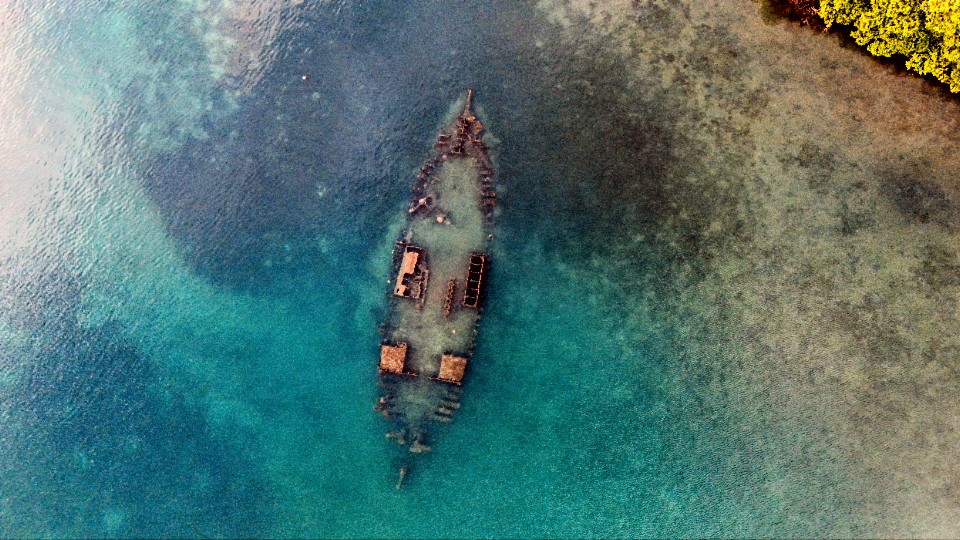
The Roly Poly from directly overhead — that's how close it is to the dock.
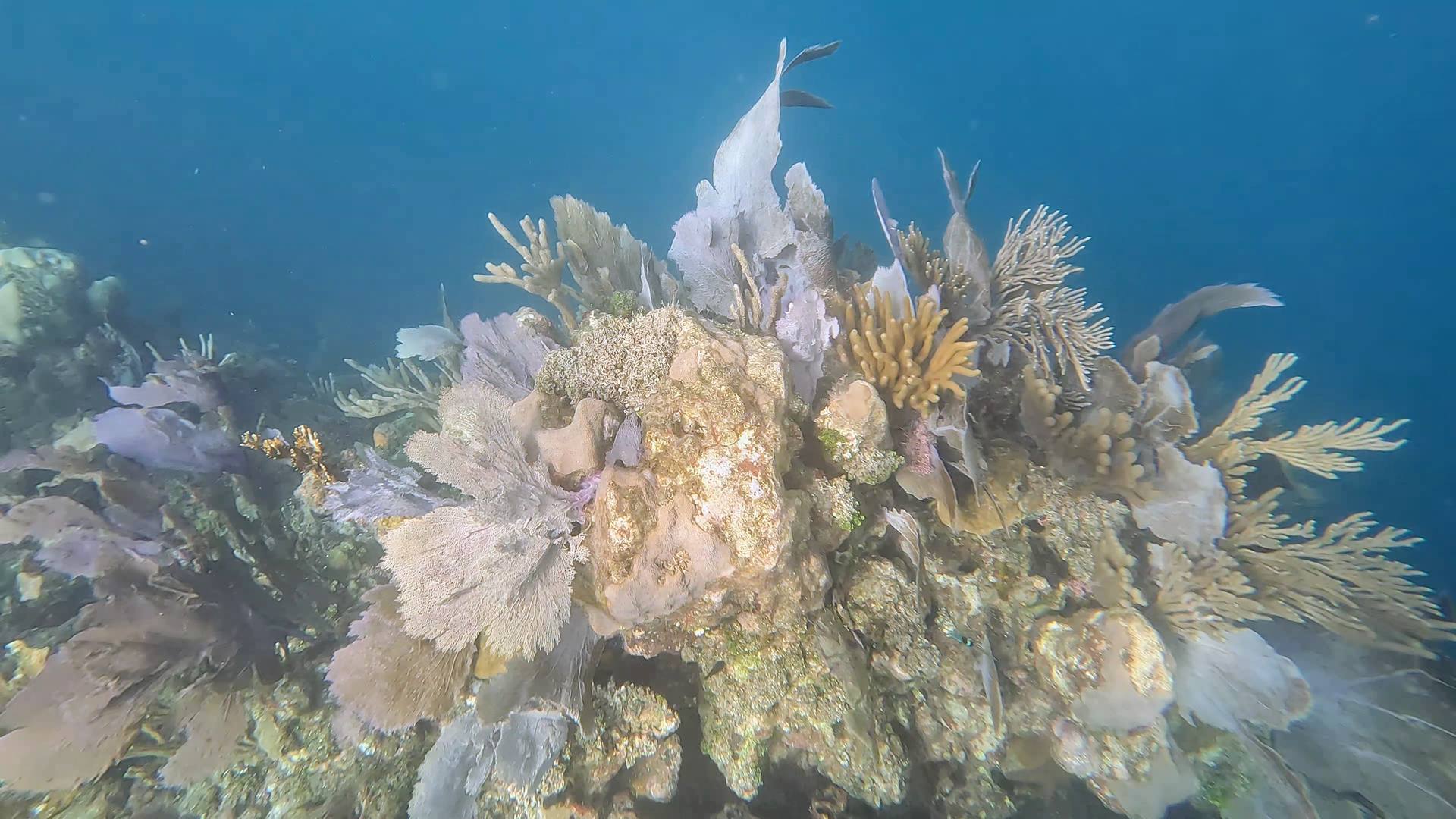
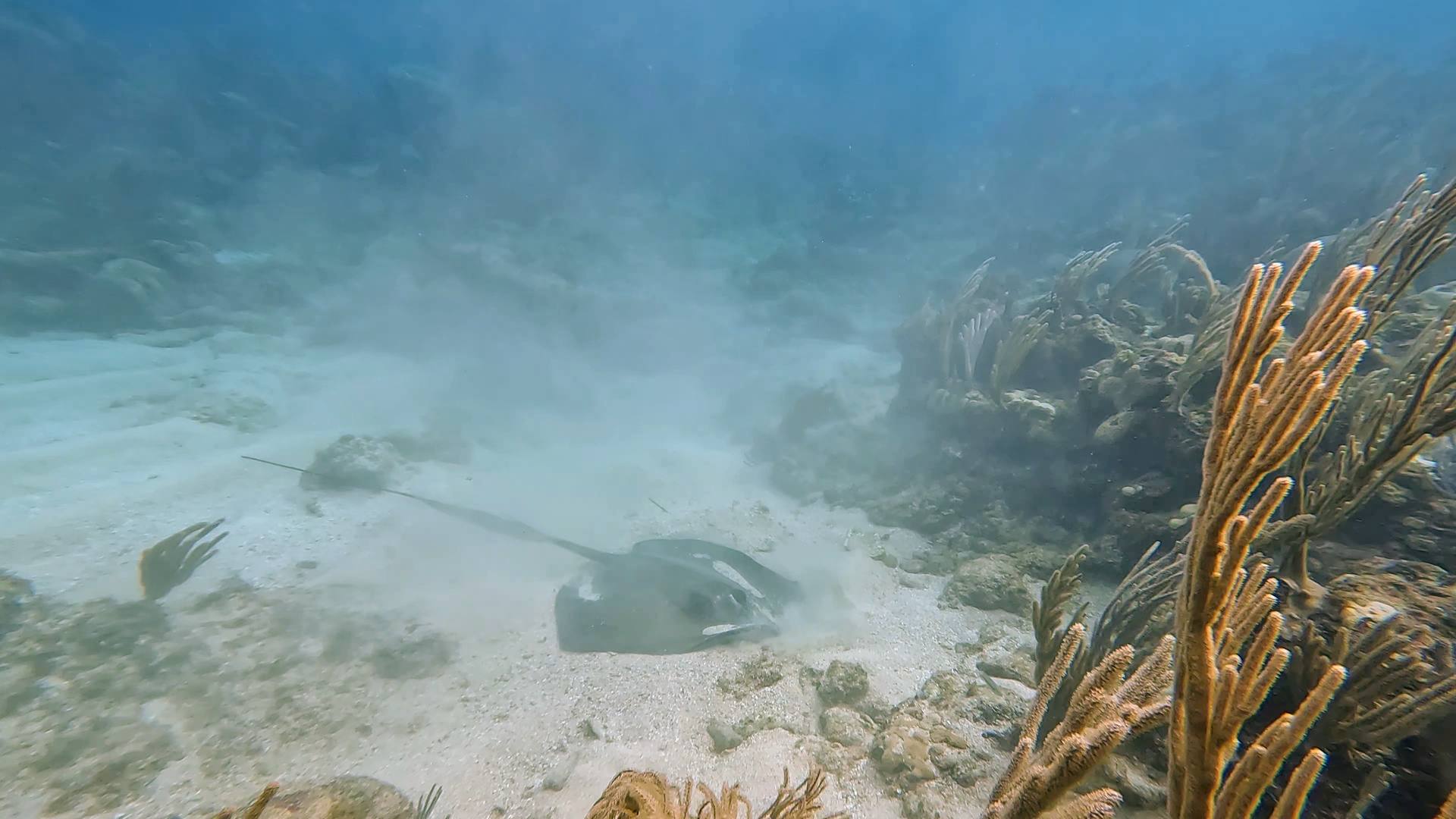
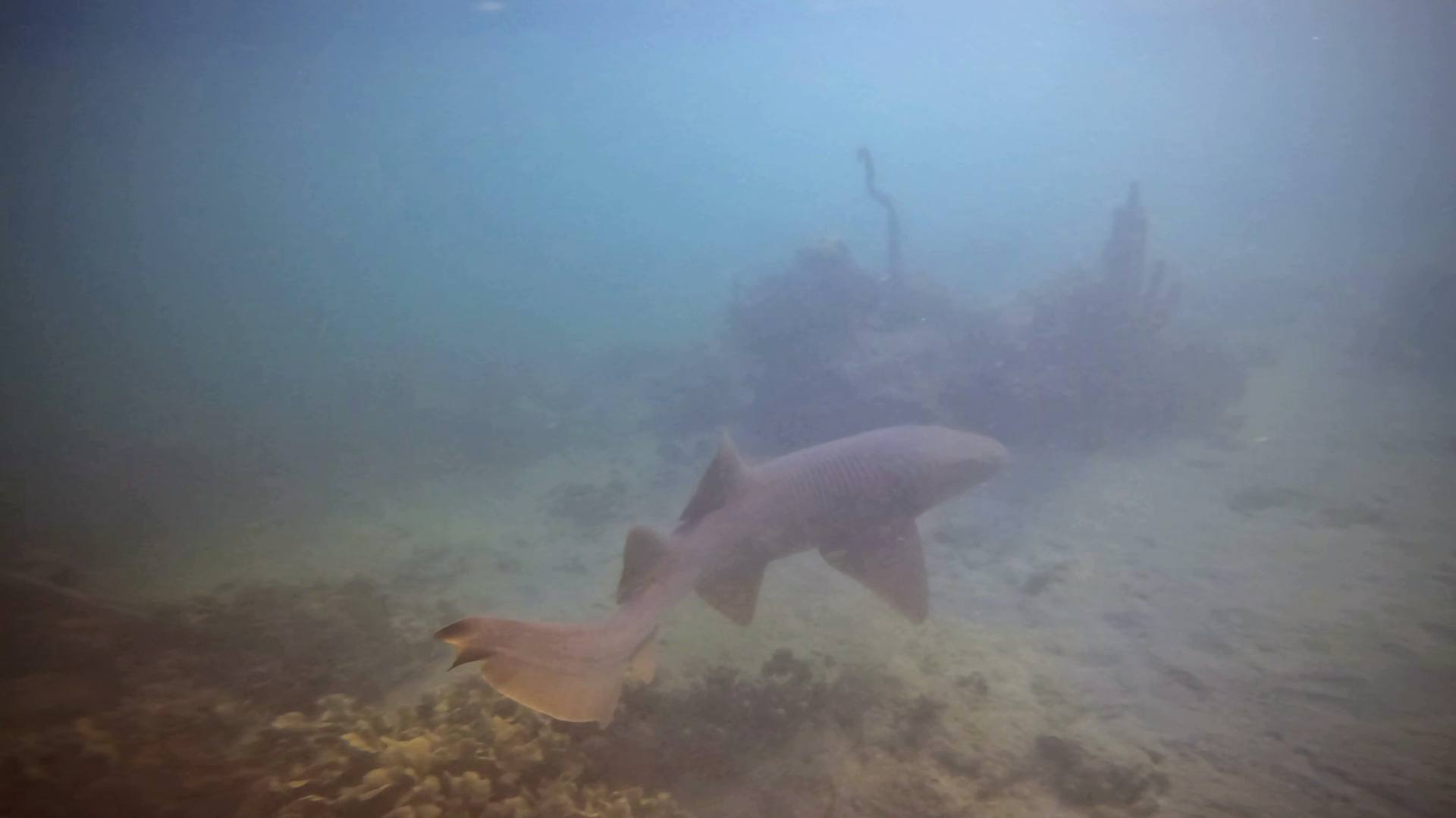
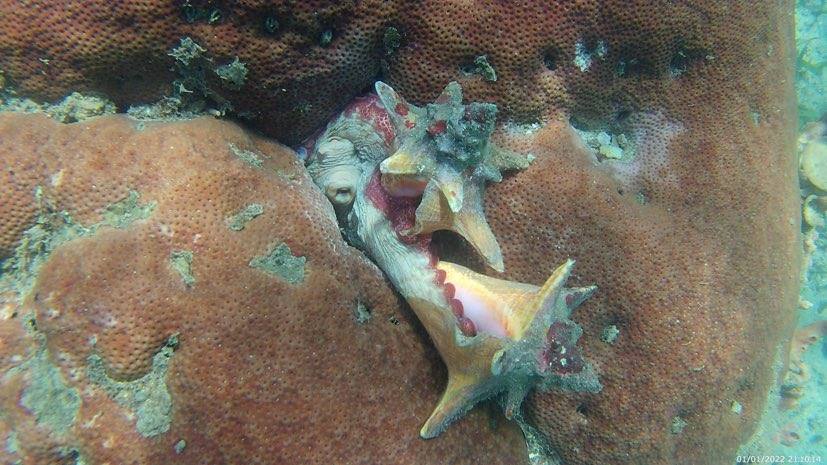
Shot in Carib Bight — coral, rays, sharks and octopus, all within a short swim.
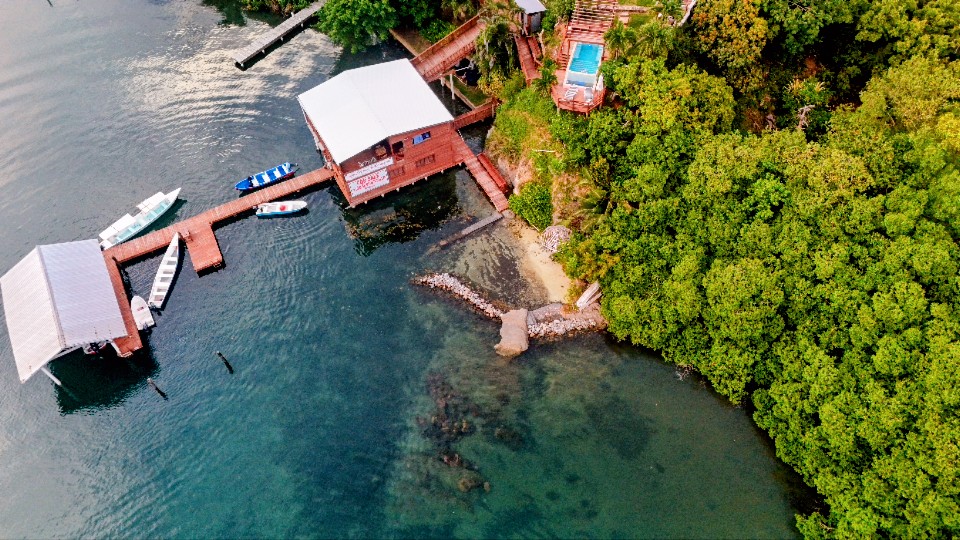
Our dock and beach — the reef starts a few strokes out.
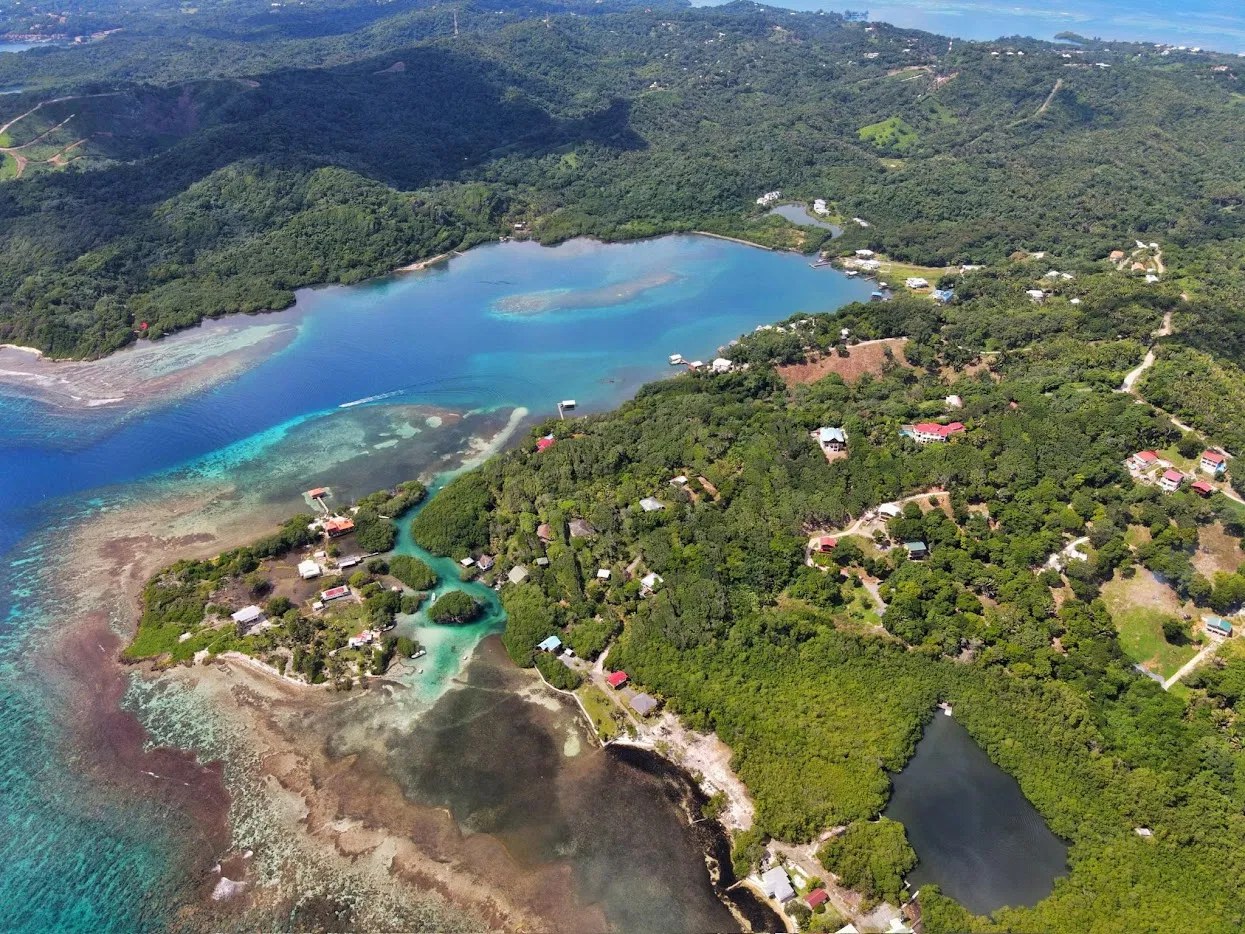
Blue Lagoon — the turquoise creek cutting into the mangroves is the way in. The tunnels themselves you can't see from the air; that's rather the point.
The bay map
Carib Bight — your backyard
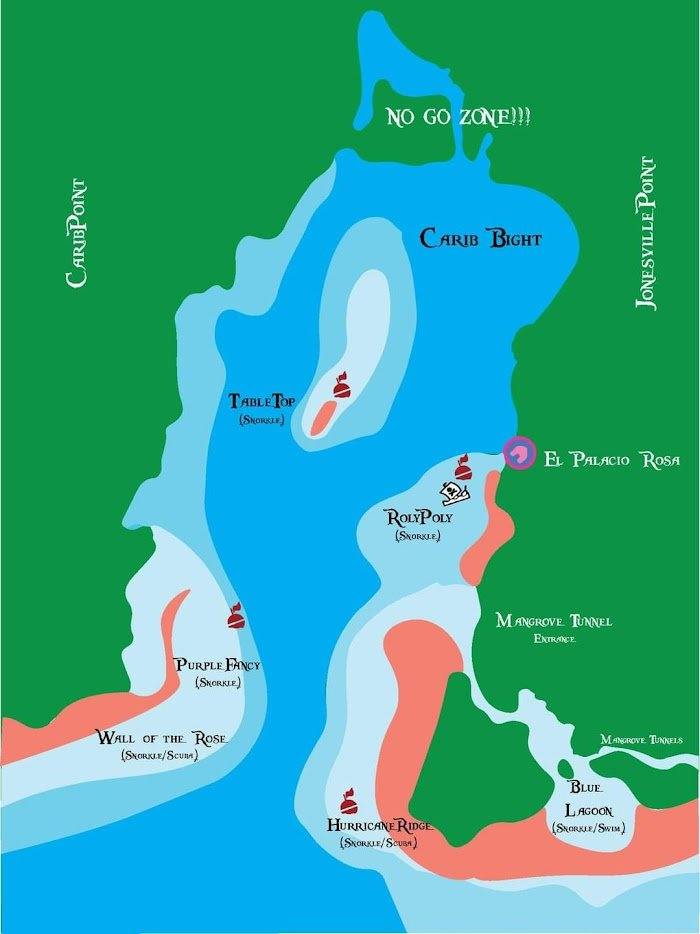
Note: No Go Zone marked at north end of bay — stay south of the marker.
The run east
The Inshore Pirate Passage
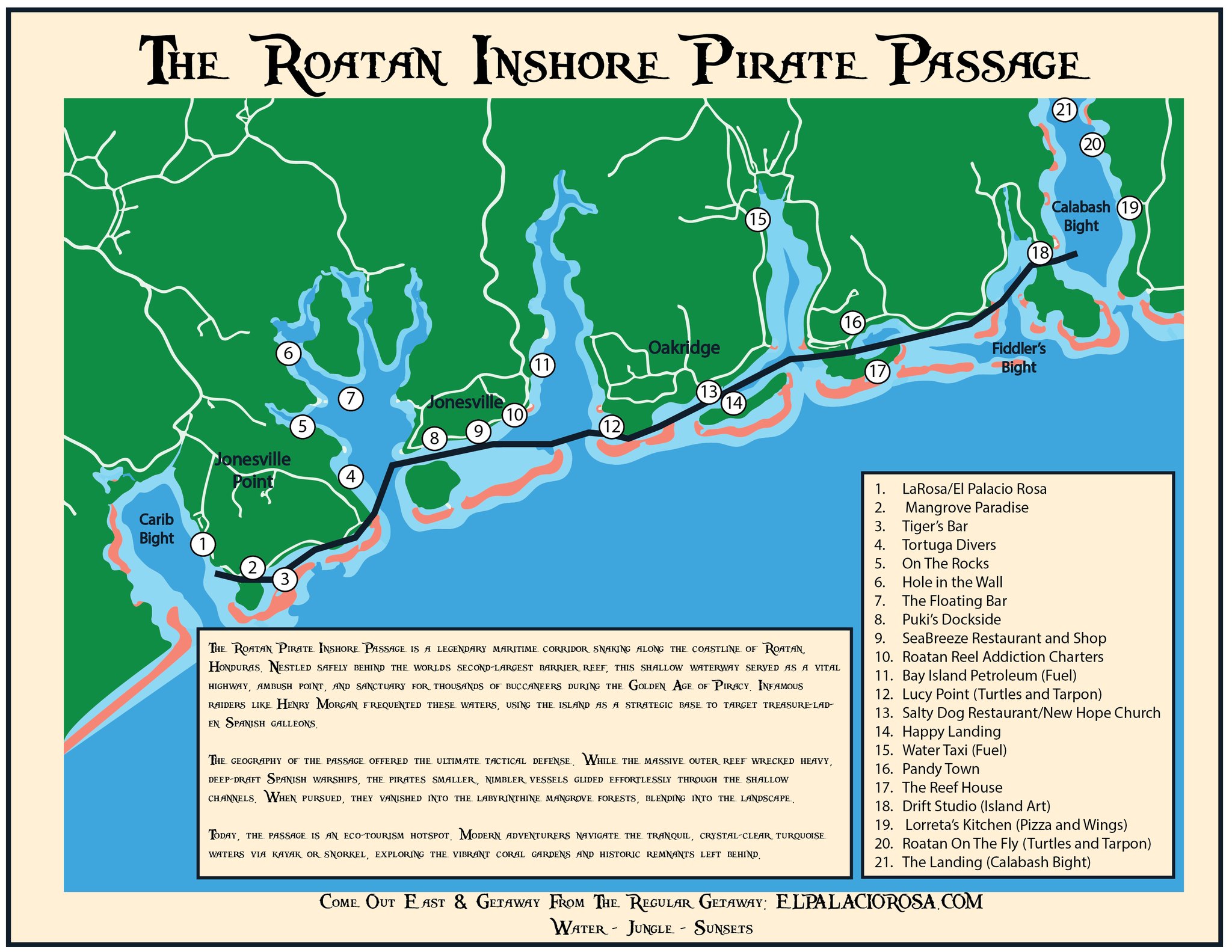
Carib Bight to Calabash — 5.78 km inside the reef, with fuel, food and the bridge marked.
Beyond these, we know several unnamed sites and secret spots that don't appear on any map — seamounts, deep shelf edges, and isolated reef formations that we share with guests who want a genuine exploration experience.
The East Side
Advantage
Most Roatan dive packages are concentrated on the west end of the island, near West Bay and West End. This is where the cruise terminals are, where the resorts cluster, and where dive boats queue up at the same sites day after day. On a busy week, you might share a dive site with four or five other boats.
The east side is different. Carib Bight sit in the middle of the island, protected from the prevailing swells, with direct access to the eastern reef system where dive traffic is a fraction of the west. The sites here — Calvin's Crack, Patti's Place, Carib Wall, and our secret spots — are dived mostly by people staying right where you'll be staying.
Spearfishing on Roatan's reefs is limited to lionfish — an invasive species that the Roatan Marine Park actively encourages divers to hunt. For large pelagic spearfishing, we arrange trips to the shelf off the Honduran mainland, where wahoo, grouper, and jacks of impressive size are regularly encountered.
Your private dive shop
Tank up.
Head out.
El Palacio Rosa has La Rosa Dive & Fish, a full dive shop that's private and guest-focused. No shared facilities, no strangers handling your gear, no waiting in line. Air fills are available for a small fee.
- Private tanks — air fills available for a small fee
- Dedicated gear lockers and rinse stations
- Hot showers post-dive
- Skiff and larger boat for outside-the-bay sites
- Captain available for reef and pelagic runs
- PADI certification with our own island-raised dive masters
- Lionfish spearfishing (park license required — we can help arrange)
- Mainland shelf trips for large pelagic spearfishing
When to Go
Roatan is diveable year-round — the water is always warm and the reef always there. But certain windows offer distinct advantages depending on what you're after.
Peak Season
December – March
Dry and calm. Excellent visibility. The busiest time on the island overall, but the east side stays quiet. Best for wall dives and photography.
Sweet Spot
April – June
Quieter, hotter, with excellent conditions. Mid-June brings the Silverside phenomenon — caves and swim-throughs fill with millions of tiny silver fish, backlit by shafts of sunlight.
Family Season
July – November
Warmest water of the year. Rain falls mostly at night. September is particularly good — schools are back in session and the island is at its most relaxed. Seamount conditions are best in summer.
What You'll See
Roatan's reef ecosystem is one of the most biodiverse in the Caribbean. Regular sightings at our sites include:
On the seamount runs and open-water pelagic trips, add wahoo, tuna, mahi-mahi, amberjack, and occasionally manta rays to that list. Whale shark sightings happen but are rare — we'll let you know if the conditions are right.
Night diving
Night dives during the new moon can produce one of Roatan's rarest spectacles: the String of Pearls — a bioluminescent display unique to these waters. Ask us when you book and we'll time a dive around it if conditions allow.
Getting Certified
in Roatan
If you're not yet certified — or want to upgrade your certification while you're here — La Rosa Dive & Fish has PADI-certified dive masters and instructors who were literally raised diving on this island. Certification happens right from the property.
Learning to dive in Roatan is a genuinely exceptional experience. The confined water sessions take place in the bay itself — warm, calm, clear, and full of life. Open water dives happen on the same reefs you'll spend the rest of your trip diving. By the end of the week you'll be a certified diver with your first real reef dives already logged.
For guests who are already certified but want guided dives with a divemaster, La Rosa Dive & Fish handles that too. You never have to arrange transport or leave the property.
Frequently Asked
Questions
Do I need to bring my own gear?
Tanks and air are provided on-site. For your regulator, BCD, wetsuit, mask, and fins — experienced divers typically prefer their own gear. If you need to rent, just ask and we can help arrange it. We have a full gear wash and storage facility on the property.
Can inexperienced or non-divers stay at El Palacio Rosa?
Absolutely. The snorkeling directly off the dock is outstanding, and there's no shortage of above-water activities — kayaking through the mangroves, paddleboarding, island tours, fishing, and watching the sunset from the infinity pool. Many of our guests are mixed groups where some dive and some don't.
How does the private dive shop work exactly?
The dive shop at El Palacio Rosa is exclusively for our guests — it's not a commercial operation open to the public. Tanks are available for certified and training divers. Air fills for a small fee. You plan your dives, grab your tanks, and go. For sites outside the immediate bay, our captain takes you out on the boat.
Is spearfishing possible?
Yes, with an important distinction. Spearfishing on Roatan's reefs is restricted to lionfish only — an invasive species that the Roatan Marine Park actively encourages divers to cull. It's genuinely fun and you're doing the reef a favor. A park license is required — we can help arrange this before your trip. For large pelagic spearfishing — wahoo, grouper, jacks — we arrange trips to the shelf off the Honduran mainland. Both need to be arranged in advance, so let us know when booking.
What certification level do I need to dive independently?
Comfortable, certified divers who are happy diving without a divemaster can access nearly 30 park sites independently using the property's boat and tanks. For the seamounts and mainland shelf runs, we recommend advanced certification and go out with our captain.
How do I get to El Palacio Rosa?
Fly into Roatan International Airport (RTB), which has direct connections from Houston, Miami, Atlanta, and other major hubs. From the airport it's about 30 minutes to the property, on a brand new road that's freshly paved the whole way to Carib Point. We can help arrange transportation. WhatsApp us at +1 408 966-0385 and we'll walk you through it.
Ready to dive?
Your private reef
is waiting.
Book El Palacio Rosa and dive Roatan's best sites from your own dock — no boats to share, no crowds, no itinerary you didn't write yourself.